Licensing exam questions begin with a patient

By making solving patients’ problems the organizing principle of all, all your learning, you will save time and improve performance on Step exams, shelf exams, clerkships, and in your residency. 

Level 1 challenge
Question 1:
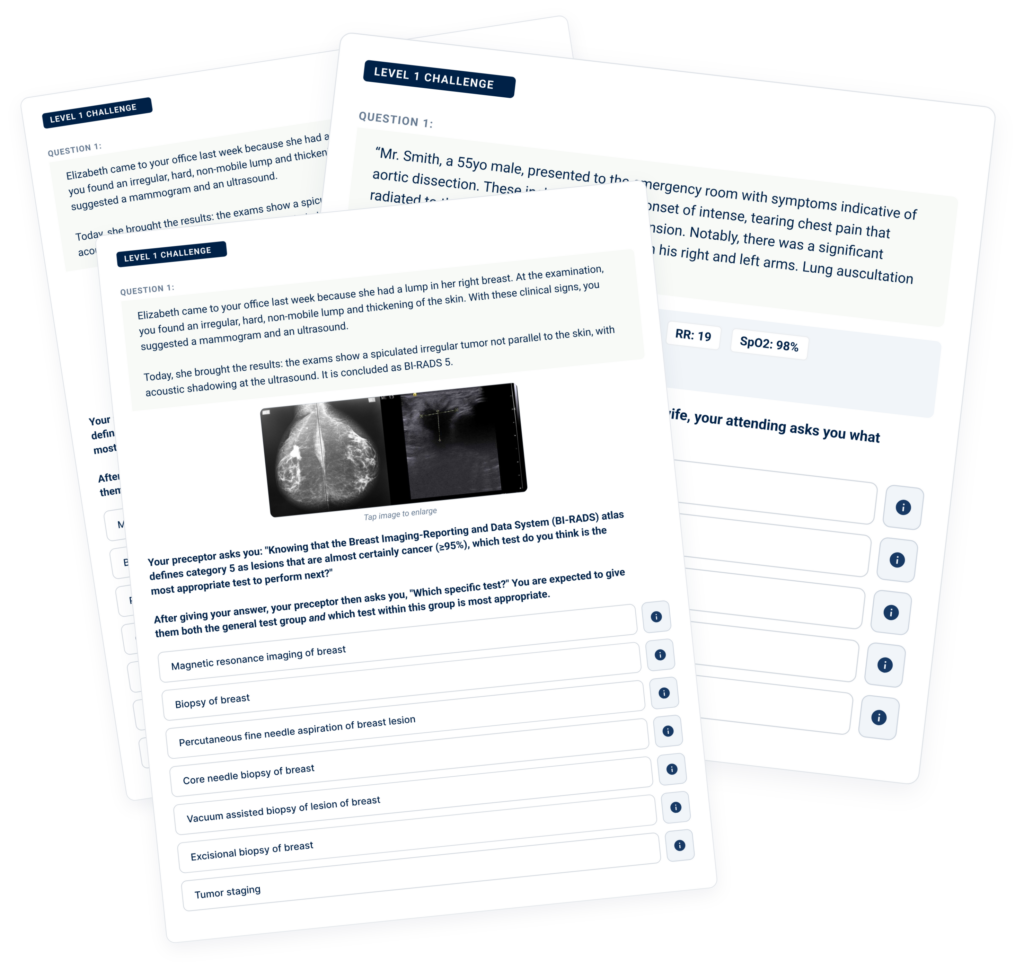
Elizabeth came to your office last week because she had a lump in her right breast. At the examination, you found an irregular, hard, non-mobile lump and thickening of the skin. With these clinical signs, you suggested a mammogram and an ultrasound.

Today, she brought the results: the exams show a spiculated irregular tumor not parallel to the skin, with acoustic shadowing at the ultrasound. It is concluded as BI-RADS 5.
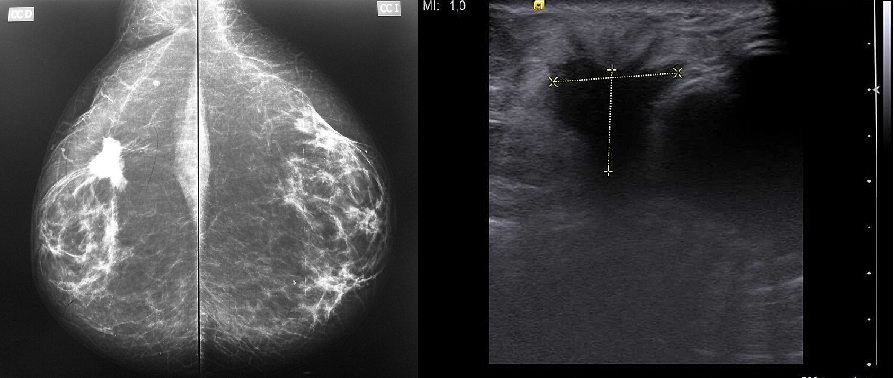
Elizabeth case study — mammogram and ultrasound findings
Tap image to enlarge
Your preceptor asks you: "Knowing that the Breast Imaging-Reporting and Data System (BI-RADS) atlas defines category 5 as lesions that are almost certainly cancer (≥95%), which test do you think is the most appropriate test to perform next?"

After giving your answer, your preceptor then asks you, "Which specific test?" You are expected to give them both the general test group and which test within this group is most appropriate.
Scope Knowledge Card

Stop regurgitating and start rehearsing. Own the performance.

Clinical reasoning is applied foundational science; they are one. Rehearse them together and both become indelible.

The Decisive Thinker

Clerkship preparation

When you arrive on the floor for your clerkship placement, you will be expected to already be capable. The only way that is possible is if you have been practicing for this day. Reading is not practicing. Just like a musician, you must arrive on the stage well rehearsed.

The Intuitive Diagnostician

Differential Diagnosis (DDx)

There are more than 1100 Dx a medical student is expected to understand. By immersing yourself in short case studies, you master groups of Dx together, and learn to distinguish each Dx from the others. This saves massive amounts of time, and massively improves your performance in clinic and in exams. 

The Complete Clinician

Knowledge Integration

In your didactic years, by immediately employing newly learned foundational science in clinical scenarios, the two become one. Then, carrying Scope onto the floor during clerkships allows you to access the foundational science again in clinic.

The Precision Learner

Targeted Knowledge Gaps

Stop running laps on ground you’ve already conquered. Restudying what you know is wasted energy. Target your exact blind spots, filling knowledge gaps instantly with Scope’s knowledge cards during every case. Turn every study minute into pure momentum.

The Confident Oral Presenter

Student EMR

During clerkships, Scope’s student EMR (SEMR) will enable you to prepare and present your patients to your preceptors with confidence. Make an impression. 
(for students only)

The Master Learner

POC knowledge resource

At the point-of-care, during clerkships, Scope (SEMR) is a virtual preceptor in your tablet or laptop. Access workflows, fill concept level knowledge gaps, learn pronounciations, and review foundational science, all curated for you in the SEMR by our physicians; they know what you need. Never guess.
(for students only)

Engineered Around How We Learn

All the principles of the science of learning have been strategically and purposefully  employed. 

Accelerated Mastery

Stop burning hours on isolated facts. By solving live patient scenarios and closing knowledge gaps as you work, you acquire only the knowledge that matters—in the exact clinical context where you’ll use it. (LIFOW)

Clinic-Ready Intuition

Memory is context dependent. Step exam questions begin with a patient’s problem. Not surprisingly, patients in clinic present with problems too; therefore, learn everything in the context of the patients’ presentations.

Unshakeable Resilience

Debrief complex cases with peers and mentors to test your logic, deepen your understanding, encode memory, and increase your energy. Fuel your motivation and build a network of support. 

Permanent Recall

Wrestling with real clinical decisions takes more energy up front, but it pays massive dividends: dramatically shorter study sessions and recall that never breaks under pressure. Go even further; author and publish a case and you will never forget. 

Images From a Level 1 Case Study

Level 1 case studies, the easiest level, introduce the differentiating symptoms and signs of a known Dx. There are 4 levels of case study difficulty.

1

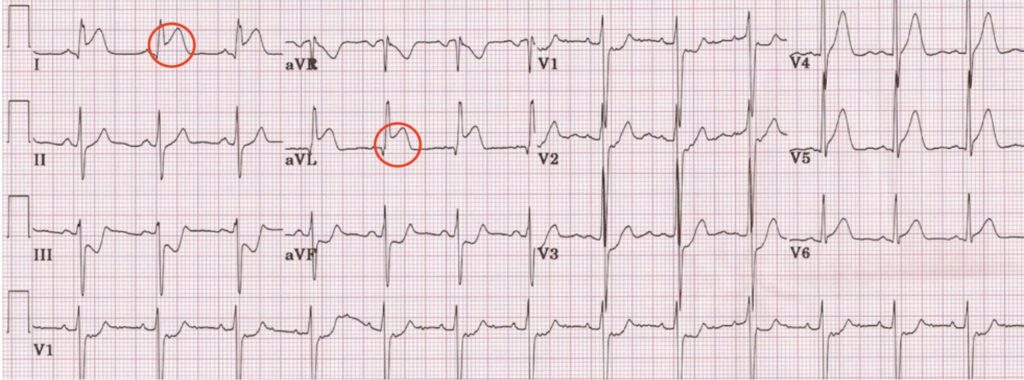
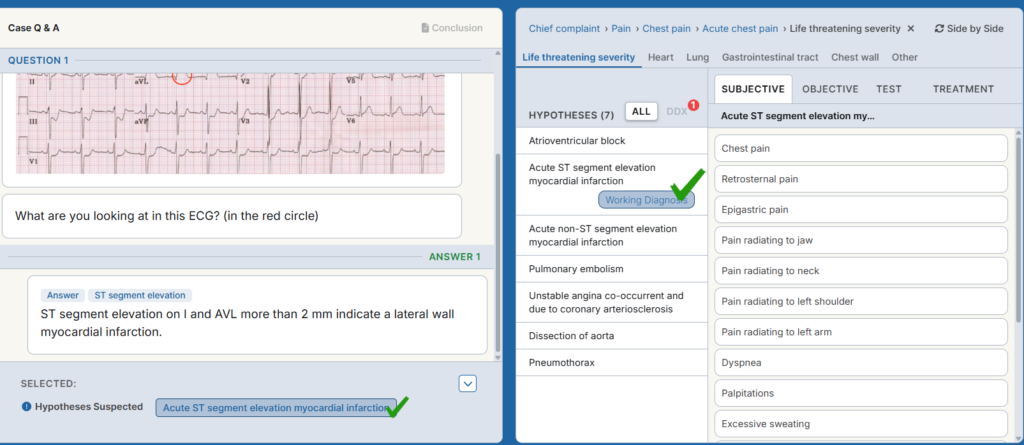
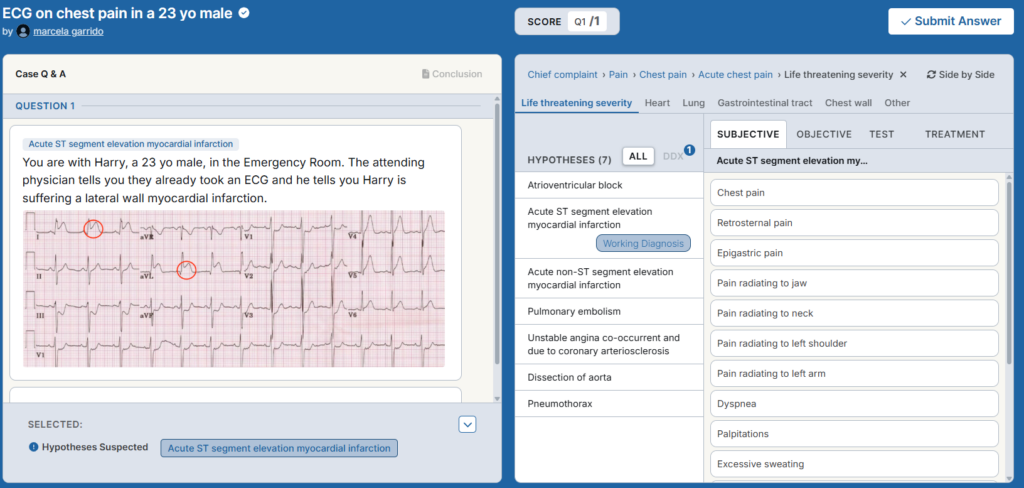
Examine Harry’s ECG. Q1 asks you to recognize and record the abnormal finding in the EMR. 

2

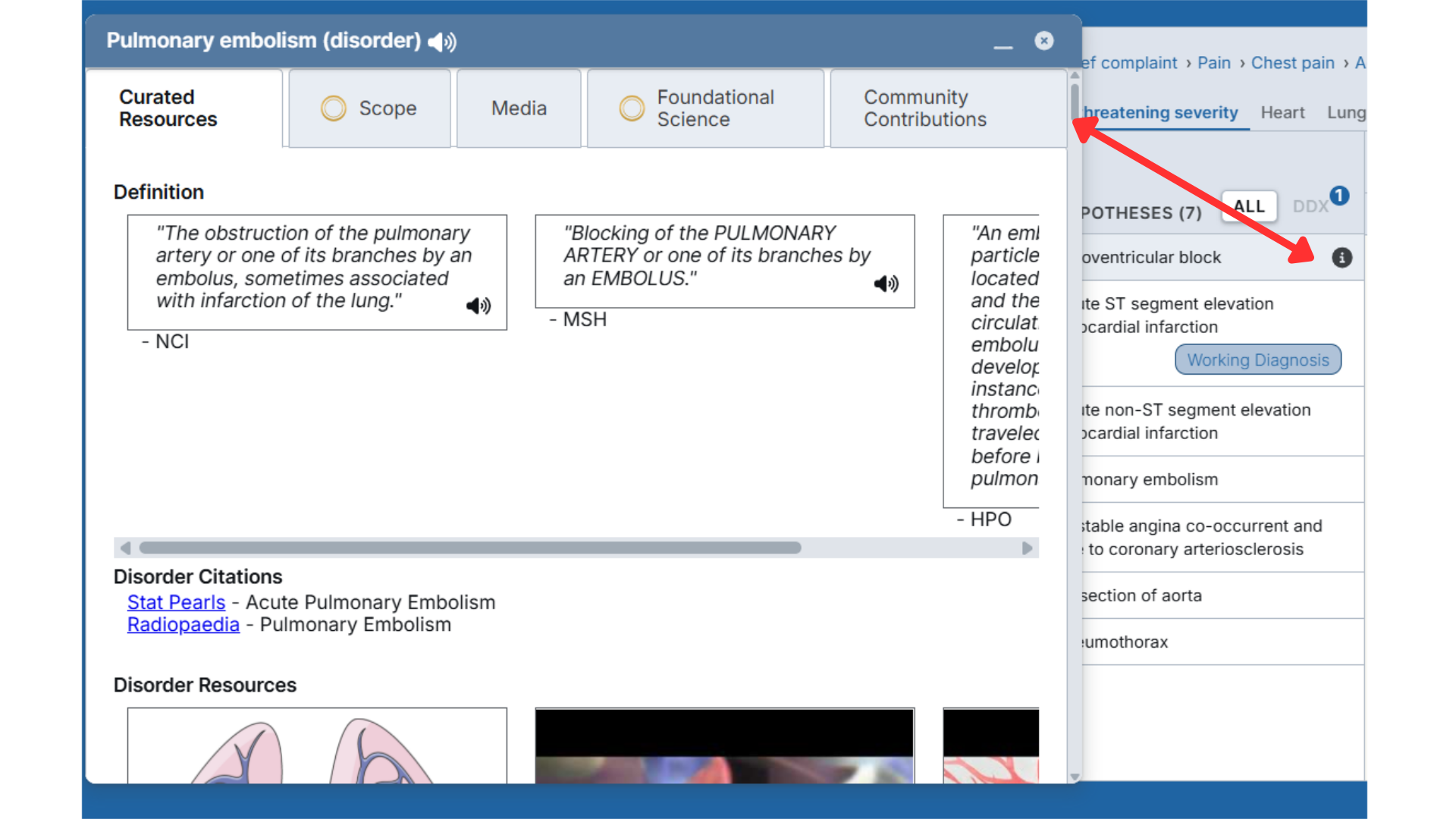
Notice the knowledge card, the living encyclopedia. Knowledge cards have been curated by physicians for every concept within Scope (thousands). 

3

Level 1 cases train foundational discernment that enables you to succeed at level 2. Level 2 enables level 3…. You level up, so begin at the beginning; it’s going to get harder.

Performance is earned through practice.

Join hundreds of medical students mastering clinical reasoning today.

Scope by EMRLD Health logo